
Pristine and precious – Aotea/Great Barrier Island’s status as a freshwater sanctuary
MADDISON JONES, MATTHEW BLOXHAM, BELINDA STUDHOLME & GRAHAM SURREY (Auckland Council)
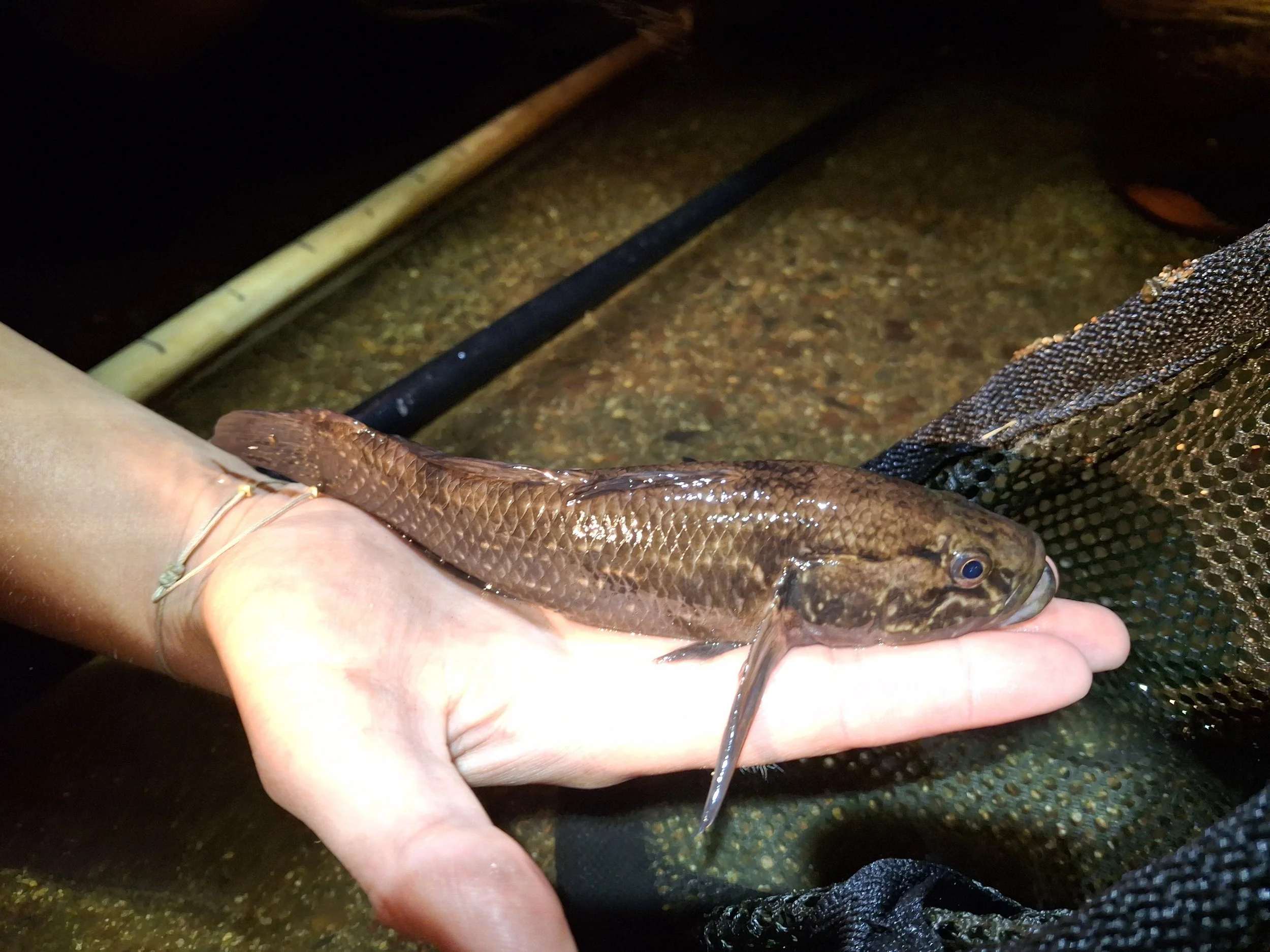
Aotea/Great Barrier Island is renowned for its rich biodiversity. While its terrestrial ecosystems are relatively well understood, the island’s freshwater ecosystems have remained largely unstudied in recent decades, yet they are thoroughly deserving of greater attention.
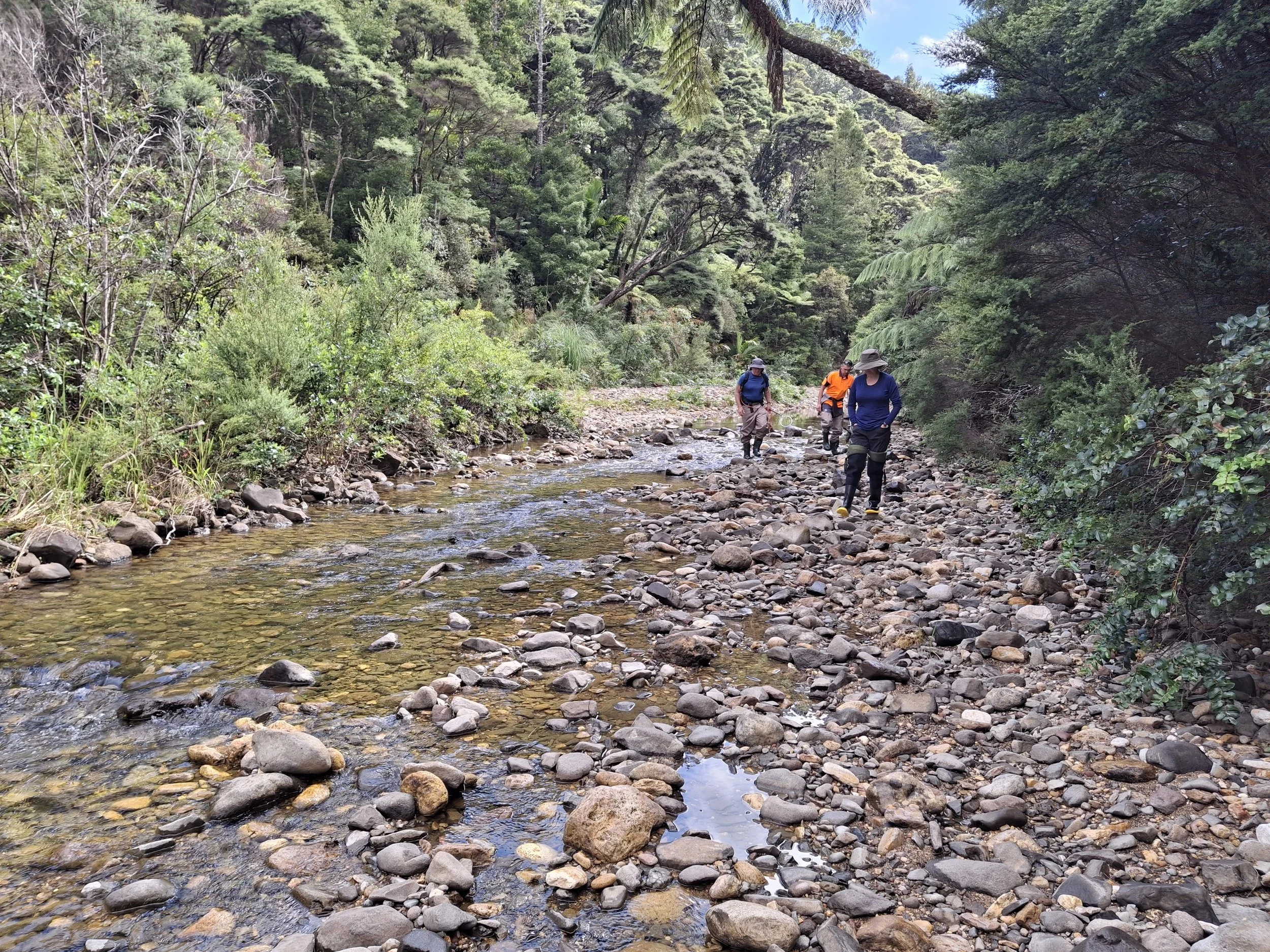
Few waterways on the mainland enjoy the same intact ‘mountains to the sea’ vegetation sequences and unfettered fish passage that Aotea’s streams do. Nor are mainland streams as natural in stream form and furnished as often with cobbled streambeds as Aotea’s streams are.
All these things are a boon for native fish species, aquatic macro-invertebrates including kākahi/freshwater mussel, and native frogs. The island boasts extensive freshwater fish habitat. Many of the streams contain large deep pools, riffle run systems and undercut banks, habitats that are extremely important for a host of freshwater species.
The team’s goal was to investigate these streams to determine the presence of threatened freshwater fish, native freshwater mussels (kākahi), and to confirm the absence of pest fish across the island.
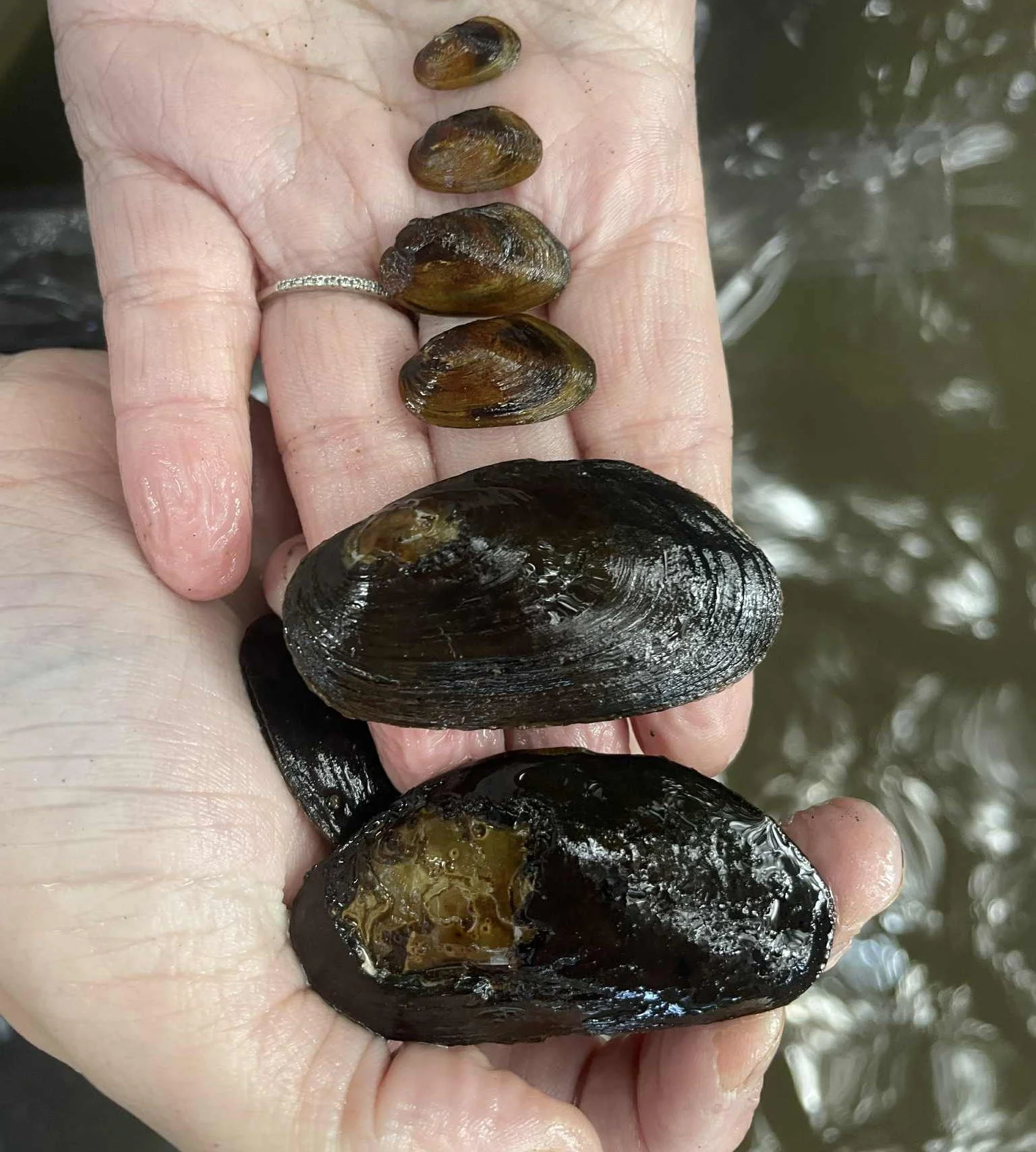
The value in this is that the largest islands in the Hauraki Gulf have emerged as strongholds and, in some cases, the last bastion for some of the region’s rarest freshwater fish and invertebrate species, including kākahi - the native freshwater mussel - and giant kōkopu, a rare and endangered whitebait species.
The first step was island-wide environmental DNA (eDNA) sampling which is a powerful, broad-spectrum monitoring technique for determining species presence. eDNA sampling involves taking water from streams of interest and forcing it through fine filters to capture traces of DNA shed by organisms. It might, for example, be excreta, mucus or other biological exudates that are snagged in the filter. Once clogged with eDNA, the filters are sent to a laboratory, where the DNA is extracted, sequenced, and compared against a library of known species. This technique is fast and non-invasive, offering a snapshot of instream biodiversity with minimal field time.
However, this technique has its limitations. Damaged DNA can lead to misidentification, cross contamination is known to occur, and not all species may be detected. Absence of evidence is not evidence of absence. For example, a species that is present in low numbers, or that inhabits a reach so far upstream that its eDNA does not carry to the sampling site, may be missed. A species will also be missed if there is no reference sequence for that species in the database.
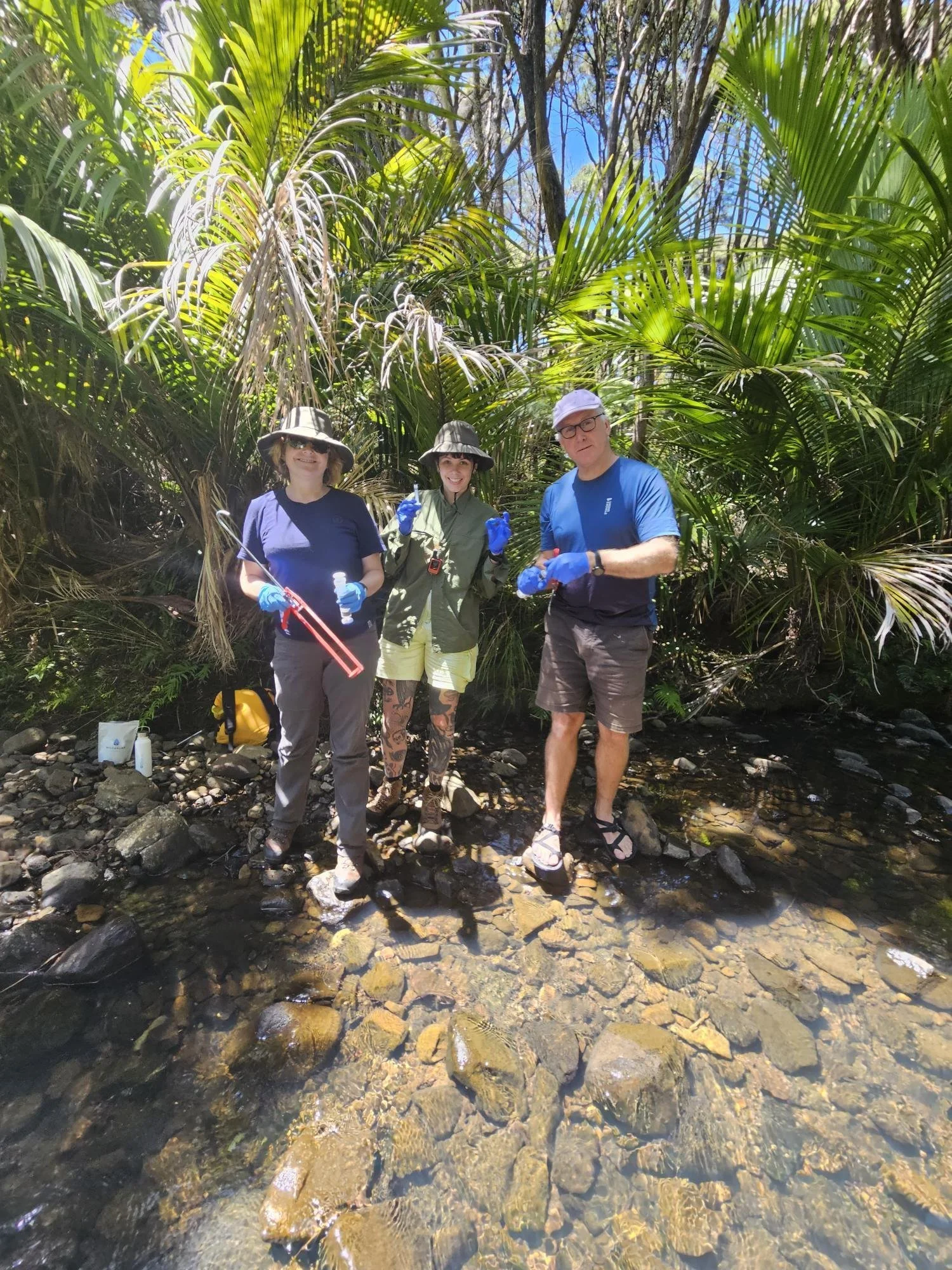
From November 2023 to February 2024, Auckland Council staff and representatives from Ngāti Rehua conducted this eDNA sampling at multiple sites across Aotea including some of its less accessible streams. The results were encouraging.
Bluegill bullies (Gobiomorphus hubbsi), classified as ‘Nationally Declining’ (Dunn et al., 2017), were detected in several streams. Remarkably, this species has not been recorded elsewhere in the Auckland region. Weak eDNA signals of giant kōkopu (Galaxias argenteus, also ‘Nationally Declining’) were also detected, alongside positive detections of kākahi (Echyridella menziesii, ‘At Risk’), in three streams. Other native species detected included giant bullies, inanga, redfin bullies, and longfin eels. All are evidence of vibrant freshwater ecosystems on Aotea.
With such encouraging results, a follow-up survey in early 2025 was conducted by a joint team from Ngāti Rehua, Auckland Council, and the Department of Conservation to ground-truth and validate the earlier eDNA detections. This is an important second step, as one thing eDNA doesn’t provide, is an indication of abundance. An indicated, eDNA giant kōkopu detection may, for example, have struck upon the last fish in that stream, a scenario we are finding more and more in mainland Auckland.
The team used a variety of methods for surveying fish, including spotlighting, electric fishing and netting. Visual searches and ‘brailling’ were used to confirm the presence of kākahi. Staff were also hopeful that other threatened fish species, not identified with eDNA, may be present including the threatened short jaw kōkopu for which there were historical observations from one of Aotea’s southern streams.
The variety of sites that were able to be covered in such a short timeframe was helped in no small way by the intimate knowledge of the island and generous on the ground assistance of Ngāti Rehua.
THE Results
Kākahi
Kākahi searches were conducted at three locations, two of which yielded very positive results. The mussels were in excellent condition and displayed a wide range of size-classes that has not been observed in mainland Auckland before, including an abundance of juvenile (smaller size class) kākahi.
Although there is limited understanding of what constitutes a healthy size class distribution, or population density for kākahi in New Zealand, these findings are promising. Reproduction appears to be happening naturally on Aotea, with size class distributions we had not yet seen elsewhere in Tāmaki Makaurau. Kākahi are one of the best freshwater filters and can filter up to 1 litre of water per hour. Hence, it is a question of numbers; the more kākahi there are in a system, potentially the cleaner the water. The presence of kākahi juveniles in Aotea streams, indicates there are more individuals coming on to sustain resident populations and to preserve the healthy waterways of Aotea.
Kākahi are a keystone species, meaning they alter the surrounding environment in a positive way, and their presence is important for other species. They have an incredibly complex and interesting lifecycle. Kākahi expel their young (glochidia) into the water column, where they attach onto a native fish using the fish to disperse to other parts of the stream, the exact location not known, although the Great Barrier survey has given potential exciting insights. After attaching to the host fish for a few weeks, the glochidia drop off and live and mature within streambed sediments. After several years, they emerge as young kākahi and begin filtering water.
Many different impacts are thought to disrupt this lifecycle and has led to many of the surveyed mainland populations showing a skew to adult size classes. What this means is that, on the mainland, in many of the streams there are no juveniles replacing adult kākahi and the populations are aging and are at risk of extinction. Finding juveniles on Aotea has in effect provided us with a reprieve and an example we can learn from and apply to mainland kākahi management.
Freshwater Fish
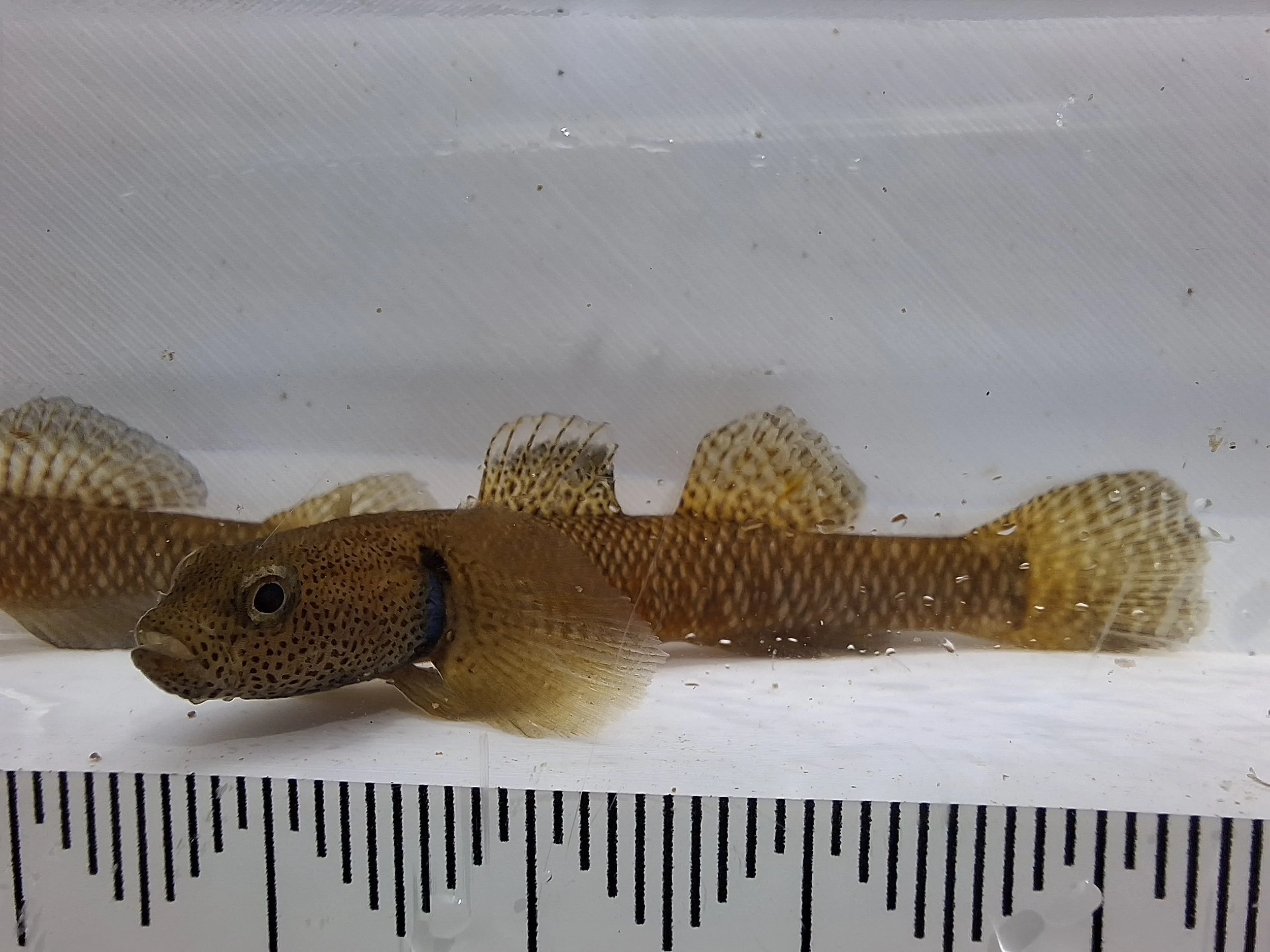
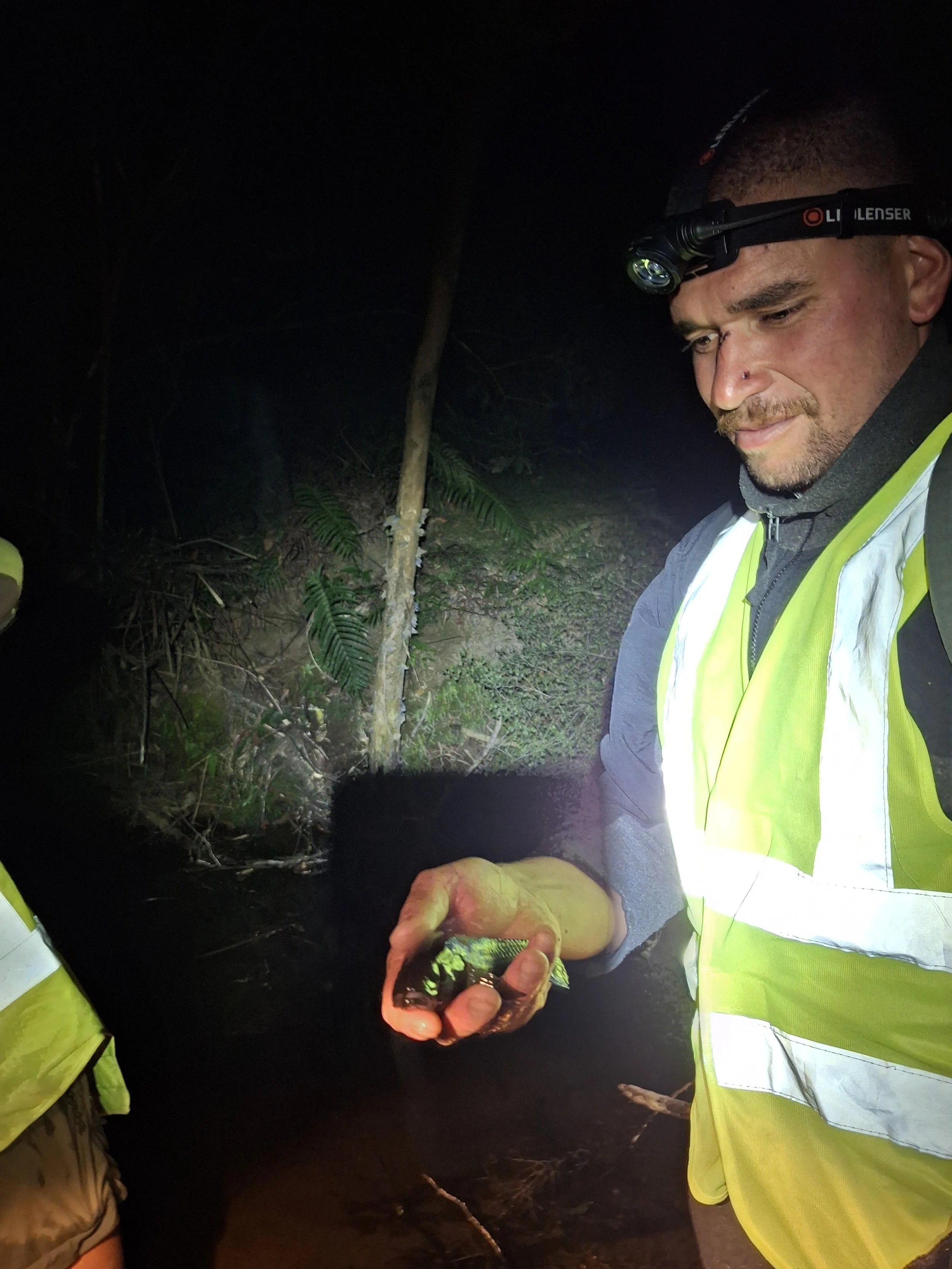
Staff recorded high numbers of bluegill bullies within riffle habitats in three out of the four streams surveyed. Bluegill bullies are the smallest in New Zealand’s Eleotridiae family. Aotea remains the only known location in Tāmaki Makaurau where this species is present. ‘Bluegills’ like fast, cobbly rapids and spawn in the spring and summer, laying their eggs on stones in the river rapids. They are carnivorous, consuming primarily mayfly larvae. As the name suggests, bluegill bullies have a striking blue gill cover.
The high recordings at three of the sites is encouraging, particularly given that many streams showed evidence of disturbance from recent severe flooding, including damage to floodplain vegetation. Despite this habitat disruption, bluegill bullies appear resilient and are persisting in healthy numbers.
At the fourth site, where bluegill bullies were more modest in number, a perched culvert crossing is preventing bullies from reaching key rearing habitat. While storms haven’t till now managed to dislodge bluegill bully, the fourth site serves as an example of how inattention and lack of oversight when replacing storm damaged stream crossings, can completely undermine a rare native fish population.
Giant kōkopu are known from at least one stream on the eastern side of Aotea. Unfortunately, no further large bodied kōkopu species were found in this survey, and there is no longer any evidence of ‘shortjaws’ occurring in the south.
Pest Fish
The team were pleased to find that no freshwater pest fish were detected on Aotea. This confirms that Aotea remains one of the few pest fish-free freshwater environments in the region.
Invasive freshwater species like pest fish, turtles and invasive freshwater clams can have many negative impacts on freshwater systems. They can prey on native species, uproot plants, reduce water quality and can trigger algal blooms. Freshwater pest plants are just as damaging, they can overrun stream beds and displace habitat for native fish and kākahi. Left uncontrolled pest plants can block water flow and turn streambed sediments anoxic. Keeping Aotea free of these threats is vital for maintaining the island’s ecological integrity and its position as Tāmaki Makaurau’s most outstanding freshwater realm.
What’s next?
We were limited in the number of sites we could survey during this initial work, and the team is keen to continue exploring more of Aotea’s waterways to better understand the full extent of its freshwater biodiversity. We’re currently discussing plans for further kākahi surveys, with the goal of identifying their locations and protecting them through targeted restoration and predator control.
To help safeguard these ecosystems, the team also plan to carry out ongoing aquatic pest surveillance every two years to ensure Aotea’s waterways remain free of invasive species.
Despite not being able to confirm the presence of a ‘new’ giant kōkopu population after a positive eDNA detection in Harataonga Stream, further eDNA ‘hits’ strongly hint at their presence there still, and further survey is envisaged.
What can you do?
There are many ways you can help protect Aotea’s freshwater species. One of the simplest is to follow Check Clean Dry (1) biosecurity protocols whenever moving between waterways. Freshwater pests can spread from one waterway to another on wet gear like water pumps, nets, kayaks and waders. It only takes the tiniest of fragments to spread pest plants like hornwort or a drop of water containing larvae to spread the invasive freshwater clam. Make sure gear is clean and dry before moving between waterways.
If you own pet fish, turtles or aquarium plants, keep them well contained and away from waterways and never release them into the wild.
Red slider turtles, a species which till now has been present on Aotea in small numbers, can live for 50 years and can produce 11 offspring per year. Reproductive output per female is up to 400 (Nick Ling; unpublished results(2)), and with no natural predators in New Zealand and an all-inclusive diet that includes fish, plants, aquatic insects, kourā, and small birds, including ducklings, clearly there is much potential for this species to naturalise and do harm on Aotea.
If you can no longer look after your pet, do not release it into your local stream, or wetland. Instead find a friend who can take it on or advertise for a new home.
If you have a stream or wetland on your property, you can explore restoration funding opportunities through Auckland Council, such as the Regional Waterway Protection Fund, which contributes to the costs for planting and fencing wetlands and streams on private land.
If you come across any barriers to fish passage, like culverts or weirs that stop native fish from swimming upstream, you can report these too. Removing or modifying these barriers is a vital part of restoring healthy freshwater ecosystems.
Most importantly, locals have their eyes on these waterways more than anyone. If you spot anything of interest, like kākahi, shortjaw or giant kōkopu, or even a potential pest species, we’d love to hear from you at ruralwaterways@aucklandcouncil.govt.nz.
Your observations can help guide future efforts.
Team Bios
Maddison Jones is a Senior Healthy Waters Specialist in Auckland Council’s Healthy Waters and Flood Resilience department. Although trained in environmental science and marine biology, she has spent the past decade working on freshwater restoration.
Belinda Studholme is Auckland Council’s Senior Freshwater Biosecurity Expert. She holds a degree in environmental science and a Master of Zoology, where she focused on Fiordland crested penguins. She has led a number of major pest-removal operations and is involved in restoration programmes aimed at reducing the impacts of pest fish on freshwater ecosystems.
Matthew Bloxham is Auckland Council’s Senior Freshwater Advisor and has more than 20 years’ experience in the environmental sector, with expertise ranging from marine science to freshwater ecology. He has been involved in wetland and stream restoration as well as threatened species recovery.
Graham Surrey is a Freshwater Scientist at Auckland Council with more than 20 years’ experience in the environmental sector, primarily in freshwater management. He has previously worked with MPI on biosecurity incursion responses and for several ecological consultancies but has recently returned to Council to help manage the freshwater ecology State of the Environment monitoring programme.
Acknowledgements
Special thanks to, Ngāti Rehua, Rodney Ngawaka & Ben Ngawaka & Fern Donovan (Department of Conservation).
References
-
www.aucklandcouncil.govt.nz/en/grants-community-support-housing/grants/grants-calendar.html
-
Dunn, N. R., Allibone, R. M., Closs, G. P., Crow, S. K., David, B. O., Goodman, J. M., Griffiths, M., Jack, D. C., Ling, N., Waters, J.M., & Rolfe, J. R. (2017). Conservation status of New Zealand freshwater fishes, 2017. Wellington, New Zealand: Department of Conservation.