
EDITORIAL: The 10th Issue
BARRY SCOTT (Editor of Environmental News)
This is the 10th issue of Environmental News I have edited since taking over this role from the late Emma Waterhouse in 2021(1). One of the most rewarding aspects of this work has been all the amazing people I have connected with on and off the Barrier and the huge amount of knowledge I have acquired from all these people through the informative articles they have shared with us. The interviews I have conducted have been most rewarding. The first in 2021 was with Rob Chappell who shared with me the story of the restoration of Repanga/Cuvier Island(2). Over a period of 50 years he made 63 trips to Cuvier so his knowledge of the flora and fauna, and the history of this island, is very deep indeed. In subsequent issues I interviewed Jo Ritchie, Biz Bell, Judy Gilbert and John Ogden, all champions of conservation on Aotea and each with a unique story to share with us.
This issue has an interview with kaumātua OpoNgwaka who shares with us his life time of observations of the changes on the land and the ocean around and beyond his home in the Broken Islands. It was very special to visit him out on Mahuki Island for this interview. His story of how the humpback whales used to migrate past the Broken Islands when he was young and how that all changed with whaling stays with me.
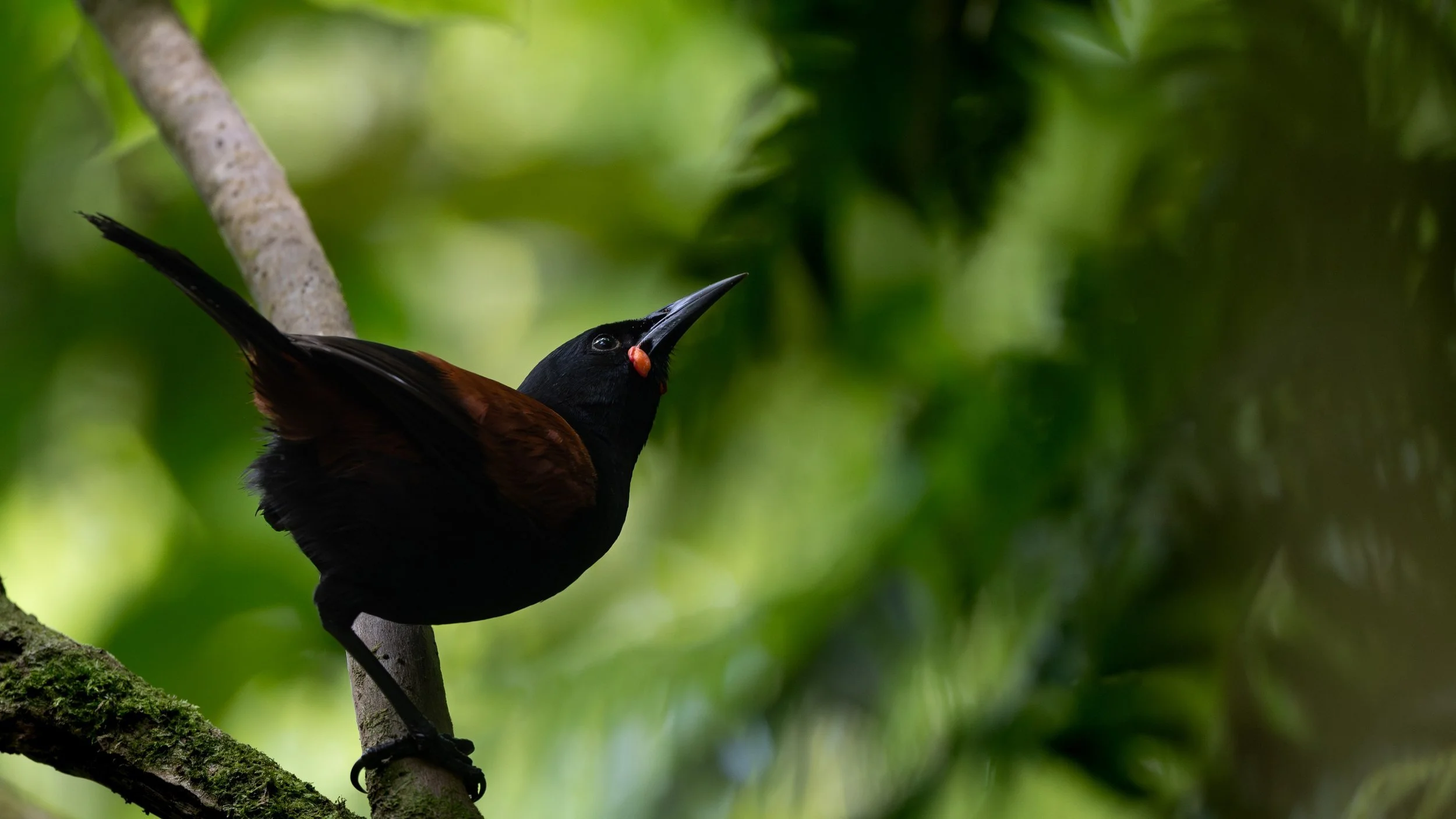
This issue also includes a short article by Opo’s grandson, Kanoa Ngawaka-Tamihana, on the translocation of tīeke from Maui tiki tiki a Taranga/Hen & Chicken Islands to Rakitū. This is the first translocation of a bird, previously lost to Aotea from predation, back onto Rakitū since it became predator free in 2018. I asked Fletcher Beazley, Operations Manager for DOC Aotea and Chairman of Ngāti Rehua-Ngāti Wai ki Aotea Trust Board, on the significance of this translocation:
Return of kōkako to Aotea will of course only become feasible once Aotea is free of rodents, a vision AGBET shares with Tū Mai Taonga and other ecological groups on the island. At the 2025 Ecology Vision Festival, Richard Griffiths of Island Conservation, highlighted for us how special islands are for protection of biodiversity and what Aotea might look like if feral cats, pigs and rodents were eradicated. One of the most transformative changes that would occur as we have seen on Hauturu would be the re-establishment of seabird communities on Aotea. He has kindly put together a write-up of that presentation for this issue of Environmental News.
However, for seabirds to truly flourish we need both healthy ocean ecosystems as well as land ecosystems. As we all know, the ocean around Aotea is under increasing pressure inter alia from both commercial and recreational fishing, invasives such as exotic caulerpa and long-spined sea urchin (now at the Mokohinau Group of islands), and rising sea temperatures. A new exhibition Ngā Huhua/Abundance – the Lifeforce of Te Moananui-a-Toi curated by our Chair Kate Waterhouse is currently running at the NZ Maritime Museum. As outlined in an article by Kate in this issue the exhibition is a story about the incredible diversity of life in the waters around Aotea. I would urge you all to take time to visit this exhibition.
Another very special feature of Aotea is the intact ‘mountains to sea’ fresh water ecosystems, a landscape feature that is increasingly disappearing from the greater Auckland region. Maddison Jones and colleagues from Auckland Council share with us the rich biodiversity of these freshwater ecosystems. The wide range of size-classes of kākahi they found in the streams is good news that there are healthy breeding populations of these important biological water filters on Aotea, and will cause us to reflect on what the current state of our local stream is and what we can do to better protect it. I have a stream through my property in Aokautere and frequently find the shells of kākahi on the banks from pukeko feeding but I don’t know if this population is still actively breeding or not – something I am now keen to find out after reading Maddison’s article.
Another major threat to our land based ecosystems is invasive weeds. Again, Aotea is fortunate because of its relative isolation and very proactive weed control programme run by Auckland Council making it feasible to eradicate some highly invasive weeds from the island. But some of our Pacific neighbours have nothing like the resources to deal with the huge invasive plant issues they face as highlighted in an article in NZ Geographic in 2024 on the ‘Plight of Niue’(3). Inspired by that article I formed a group called ‘Friends of Niue’ to organise an annual self-funded group of volunteers to go to Niue and help – our inaugural 2025 venture is described in this issue. One of the rewards of that trip was to learn first-hand about the environmental challenges they face but more importantly how they are going about dealing with these challenges. I was particularly struck by their collective vision to put nature at the heart of the economy and their aspiration to be predator and pest free(4). I see some great opportunities for collaboration with conservation groups on Aotea, where there is considerable collective knowledge and experience in trapping rats and feral cats. Volunteer efforts like this are also a great opportunity for us to learn from others how they are dealing with some of the environmental threats, a good example from Niue being feral pigs(5).
A special thanks to the many contributors to this and previous issues of Environmental News. I hope you enjoy this issue.
References
-
Environmental News Issue 44, p. 21-23, 2021.
-
Environmental News Issue 44, p. 4-9, 2021.
-
Pete McKenzie and Richard Robinson (2024). The Fight for Niue. New Zealand Geographic Issue 189 https://www.nzgeo.com/stories/the-fight-for-niue/
-
Lou Sanson. The Press. Sept 6, 2025. Tiny Niue leads the world with big conservation ambitions https://www.thepress.co.nz/nz-news/360791652/tiny-niue-leads-world-big-conservation-ambitions
-
Controlling feral pigs on Niue: https://www.sprep.org/news/sustainable-feral-pig-control-niue-combines-tradition-and-technology-to-tackle-feral-pig-impacts