
Riding the Winds of Change
The Seabirds of Northern Aotearoa
CHRIS GASKIN (The Seabird Trust)
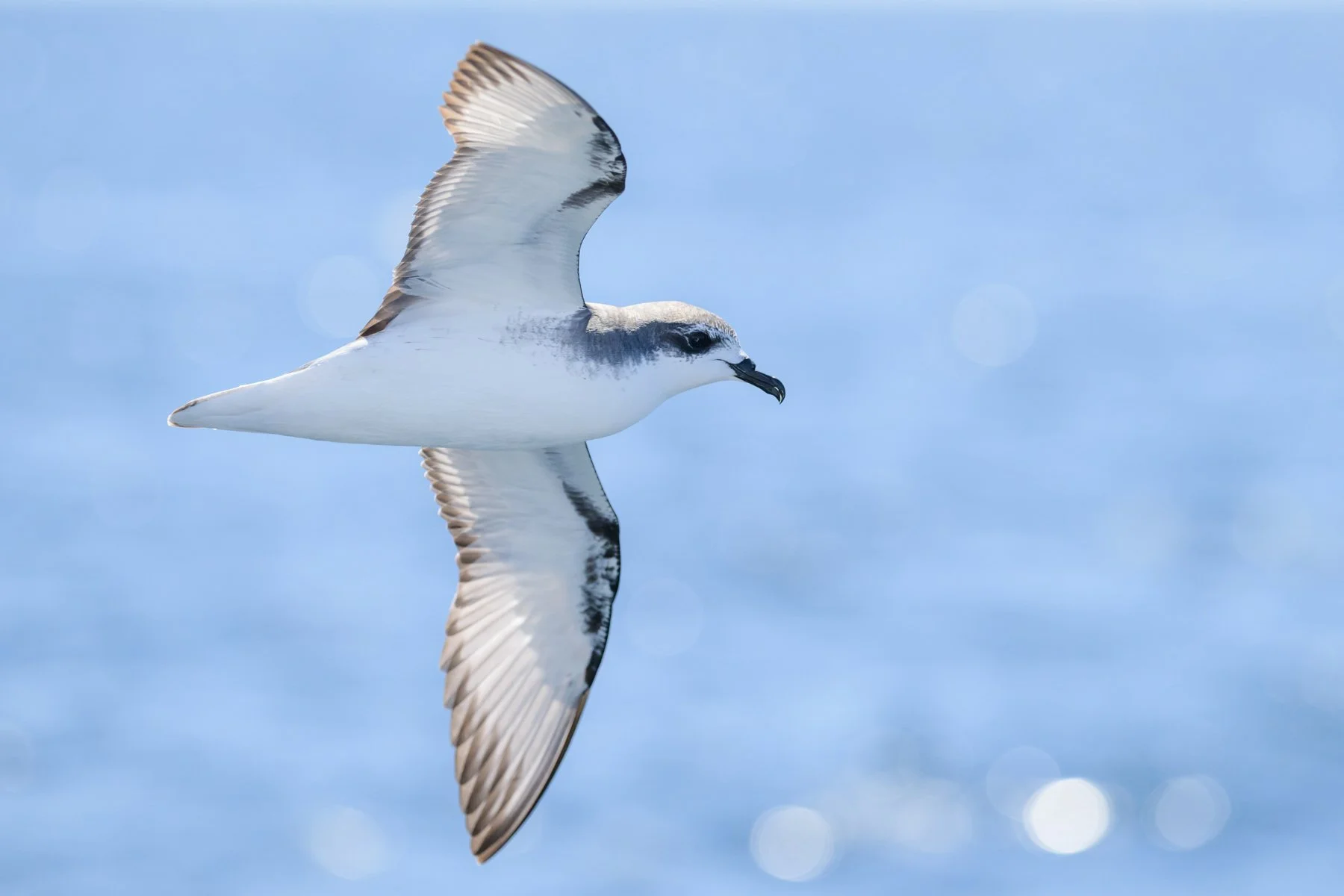
Cooks Petrel (Credit: Edin Whitehead)
When people think of Aotearoa New Zealand’s wildlife, they often picture kiwi, kākāpō, or tūī. Yet Aotearoa’s greatest claim to global biodiversity fame lies arguably not in its forests, but at sea. After all Aotearoa is an archipelago surrounded by the highly productive waters of the Southern Ocean. We host the greatest diversity of petrels and shearwaters, albatrosses, penguins, and shags found anywhere on Earth. At the same time, we carry a sobering responsibility: no other nation has as many globally threatened seabird species.
Of the approximate total of 11,000 bird species worldwide, only around 370 are classed as seabirds. Remarkably, one quarter of those species breed in Aotearoa (87). At least one third of all seabird species globally occur within Aotearoa’s Exclusive Economic Zone, and 37 species breed nowhere else in the world. By comparison, Mexico - the country with the next highest number of endemic seabird species - has just five. In fact, Aotearoa is home to more native seabirds than all of its land birds, freshwater birds, and shorebirds combined.
A Northern Stronghold
Northern Aotearoa plays a crucial role globally. Twenty-eight seabird species breed in the region, including a small population of Buller’s albatross on the Manawatāwhi / Three Kings Islands. Twenty-seven species breed within the wider Hauraki Gulf region, encompassing Tāmaki Makaurau, Waikato, and Te Tai Tokerau. Five of these species breed nowhere else in the world.
The region’s island sanctuaries - including Hauturu/Little Barrier Island, Aotea/Great Barrier Island, the Poor Knights Islands, Marotere (the Chickens), Taranga (Hen Island), and the Mercury and Alderman Islands - provide some of the most important seabird breeding habitat in the Southern Hemisphere. While discussions about seabirds often focus on decline and loss, there are encouraging signs that conservation efforts are working.
Skipping in from extinction - the return of the New Zealand Storm Petrel
Perhaps no story better illustrates good news for seabirds than that of the New Zealand storm petrel. The storm petrel group are the miniatures of the seabird world where albatrosses are the giants. Once believed extinct for more than a century, the species was dramatically rediscovered in 2003. A decade later, a team of us confirmed it breeding on Hauturu/Little Barrier Island. That discovery coincides with the benefits of rat and cat eradication on Hauturu, it would have been in danger of going extinct for a second time as numbers were likely to have been critically low. Now released from predator-pressure it appears to be recovering. Initial population estimates in 2017 suggested a growing population of a few thousand birds. Subsequent monitoring has provided encouraging evidence that numbers continue to increase and at-sea sightings have also increased substantially. The species remains threatened because breeding is confined to just one island, but the trajectory is looking positive for this tiny remarkable seabird.
Saving Tara Iti
Another conservation success story centres on tara iti, the New Zealand fairy tern, Aotearoa’s rarest endemic breeding bird. Its survival depends on a collaborative effort involving the Department of Conservation, local communities, increased funding, site-based protection, predator control, habitat enhancement, bird rescue programmes, and ground breaking captive-rearing techniques undertaken with the Auckland Zoo. At the end of the most recent breeding season, conservation managers are cautiously optimistic. Eight captive-reared chicks joined ten wild-reared fledglings, potentially providing a significant boost to the overall population. For a species whose future has hung by a thread for many years, every fledgling counts.
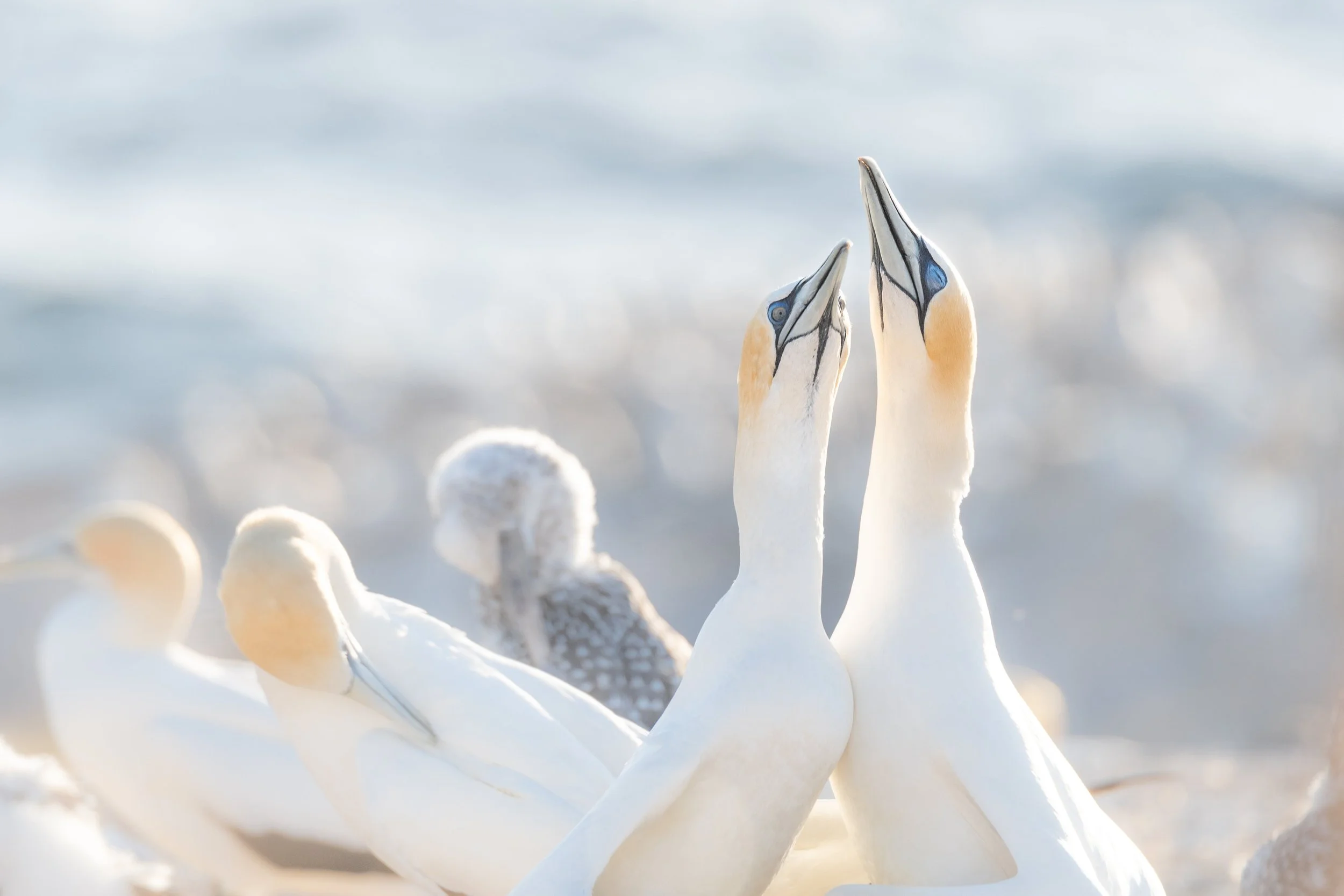
Gannets on Mahuki Island (Credit: Edin Whitehead)
A Mainland Restoration Success
The seabird restoration programme at Tāwharanui Open Sanctuary demonstrates what can be achieved when predator exclusion and long-term management are combined. Building from a tiny remnant population of manu ōi (grey-faced petrels), the sanctuary now supports four breeding species of petrels and shearwaters. Most notably, it hosts the first mainland breeding pair of tītī (Cook’s petrels) recorded in living memory. The success extends beyond seabirds. Like Tiritiri Matangi, Tāwharanui has become a showcase for ecological restoration, supporting a growing diversity of native wildlife through both natural recolonisation and carefully planned translocations, strongly supported by the wider Auckland community.
Warning Signs from a Warming Ocean
Not all the news is positive. Research by PhD candidate Edin Whitehead tracked pakahā (fluttering shearwaters) breeding on the Mokohinau Islands. Her work revealed that adult birds repeatedly returned to the same productive feeding hotspots within the Hauraki Gulf year after year, favouring nearshore habitats.
However, during the prolonged marine heatwave that began in late 2021, the birds spent longer periods foraging, despite travelling similar distances. Although they returned with comparable amounts of food, the additional effort may indicate declining prey availability associated with warmer ocean conditions, likely a reduction in zooplankton (krill) availability. These findings raise broader concerns about how climate change may affect not only pakahā but many other marine species dependent on healthy, productive oceans.
The Importance of Workups
One of the defining ecological features of northeastern New Zealand waters is the spectacular phenomenon known as “workups” or “boilups”, well known to fishers. From the Three Kings Islands to East Cape, large concentrations of fish, zooplankton, marine mammals, and seabirds congregate in feeding aggregations that can transform the sea surface into a frenzy of activity. Schools of small-mediumsized pelagic fish drive krill (Euphausiids) and other prey toward the surface, making them more accessible to seabirds such as prions and shearwaters. Predators including kingfish and sharks add to the chaos, creating one of the ocean’s most dynamic feeding systems.
For seabirds, these events are far more than a spectacle. They are critical feeding opportunities during energetically demanding periods such as chick rearing. If the abundance or distribution of forage fish declines, seabirds may find their prey more dispersed and harder to access, potentially affecting breeding success and survival.
Persistent Threats
Despite conservation gains, significant threats remain. Fisheries bycatch continues to be one of the most serious issues facing many seabird species. Accidental capture in fishing operations still claims substantial numbers of birds each year, including endemic species such as tākoketai (black petrel) and toanui (flesh-footed shearwater). Climate-related impacts are also intensifying. More frequent storms, increased sediment runoff, and rising coastal turbidity can have severe consequences for diving seabirds. Kororā (little penguins), for example, rely on underwater visibility to locate prey. Murky water can dramatically reduce their foraging success. Meanwhile, the ongoing decline of kawau tikitiki (spotted shags) in the inner Hauraki Gulf remains a major conservation concern with the finger being pointed very much at set netting.
Where Seabirds Feed
The diversity of seabirds in northern New Zealand is mirrored by the diversity of marine habitats they use. Some species forage in estuaries, harbours, and sheltered coastal waters. Others venture across the continental shelf or into deep pelagic waters far from land. More than half of New Zealand’s seabird species regularly feed over 50 kilometres offshore.
Gulls, terns, shags, penguins, and gannets generally remain close to breeding colonies, while species such as fluttering shearwaters, diving petrels, and storm petrels mainly utilise shelf waters. At the other extreme, Cook’s petrels, Pycroft’s petrels, black petrels, and grey-faced petrels routinely forage beyond the continental shelf in oceanic waters, sometimes thousands of kilometres from their breeding colonies.
Tracking studies of tākapu (Australasian gannets) have revealed remarkable patterns of habitat partitioning (sharing) within the Hauraki Gulf. Birds breeding on Horuhoru Rock near Waiheke Island predominantly feed within the inner and central Gulf, whereas birds from Mahuki Island near Aotea forage mostly in northern and outer Gulf waters. These findings suggest that colonies may respond to local differences in prey availability, highlighting the close connection between seabird populations and marine ecosystem health. This is reflected in changes to colony populations with the inner Gulf colonies declining, while Mahuki has seen a significant increase.
Nature’s Ecosystem Engineers
Seabirds do far more than simply inhabit islands - they help create entire ecosystems. The word “guano,” derived from the Inca civilisation of South America, means “gift of the gods.” For centuries, seabird guano was prized as a powerful fertiliser, and agriculture in Aotearoa once relied heavily on guano mined from Nauru in the Pacific islands.
On seabird islands, however, guano is not merely a fertiliser - it is an ecological engine. Burrowing petrels and shearwaters return nightly from the ocean carrying marine-derived nutrients in the food they consume. Through guano deposition and burrow excavation, they enrich island soils with nitrogen and phosphorus. Researchers estimate that seabird colonies can contribute up to 100 times more nitrogen and 400 times more phosphorus than is typically applied to agricultural land. These nutrients permeate entire ecosystems, influencing plants, invertebrates, reptiles, and even surrounding marine environments. The result is a circular seabird economy: birds harvest nutrients from the ocean, transport them onto land, and those nutrients eventually return to coastal waters, enriching nearshore ecosystems and supporting biodiversity both above and below the tide line.
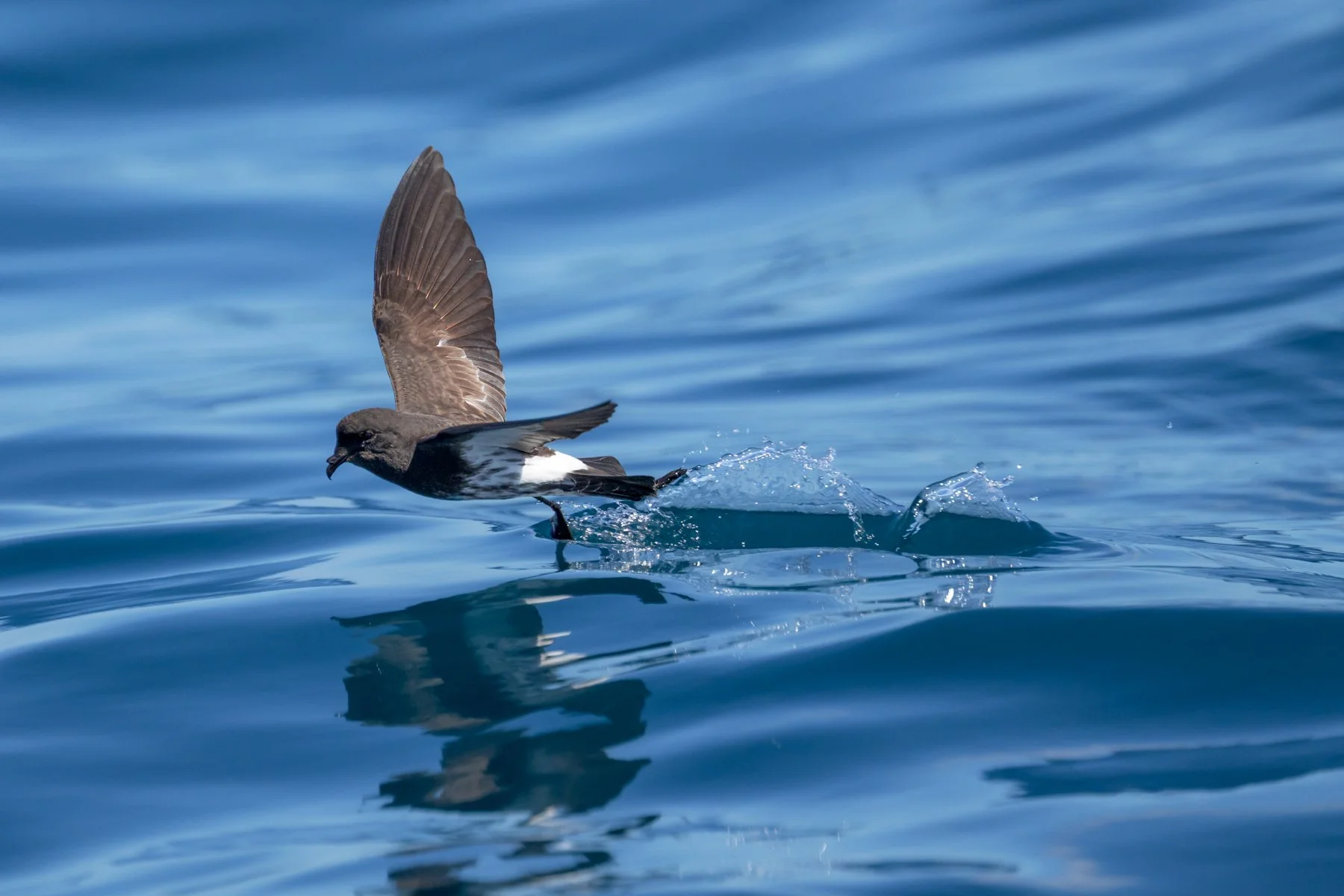
NZ Storm Petrel (Credit: Edin Whitehead)
The Promise of Rakitu
One island that exemplifies the future potential of restoration is Rakitu Island, located east of Aotea. Following the successful eradication of rats in 2018, acoustic monitoring detected several seabird species, including totorore (little shearwaters) attempting to breed, a particularly exciting discovery. The island’s strategic location means numerous other seabird species regularly pass nearby or forage in surrounding waters. Beyond seabirds, Rakitu offers enormous opportunities for restoring reptiles, invertebrates, and native plant communities. The question is not whether the island can become a biodiversity stronghold, but how quickly. For many conservationists, achieving that vision will require addressing one remaining obstacle: weka. While iconic in their own right, these avian predators pose a significant challenge for seabirds attempting to recolonise the island as a significant predator of eggs and chicks. Removing them completely would unlock Rakitu’s full ecological potential.
A Shared Responsibility
Aotearoa’s seabirds connect oceans, islands, and ecosystems on a global scale. They are among the country's most remarkable natural fauna and among its most vulnerable. The good news is that where predators have been removed, habitats restored, and species actively managed, seabirds have demonstrated an extraordinary capacity for recovery. Yet their future remains closely tied to the health of our oceans. Fisheries management, climate resilience, predator control, and habitat restoration (both marine and terrestrial) will all play critical roles in determining whether future generations inherit thriving seabird colonies or only stories of what once existed.
As the world’s seabird capital, Aotearoa holds both a privilege and a responsibility. As many of our seabirds are migratory, travelling outside our EEZ during their non-breeding periods, there is also a shared responsibility with other nations, requiring New Zealand to engage in many international agreements which offer opportunities for collaboration to protect our precious seabirds.