Kororā of Aotea
Building Knowledge, One Burrow at a Time
THOMAS DALY (Ecology Vision Aotea)
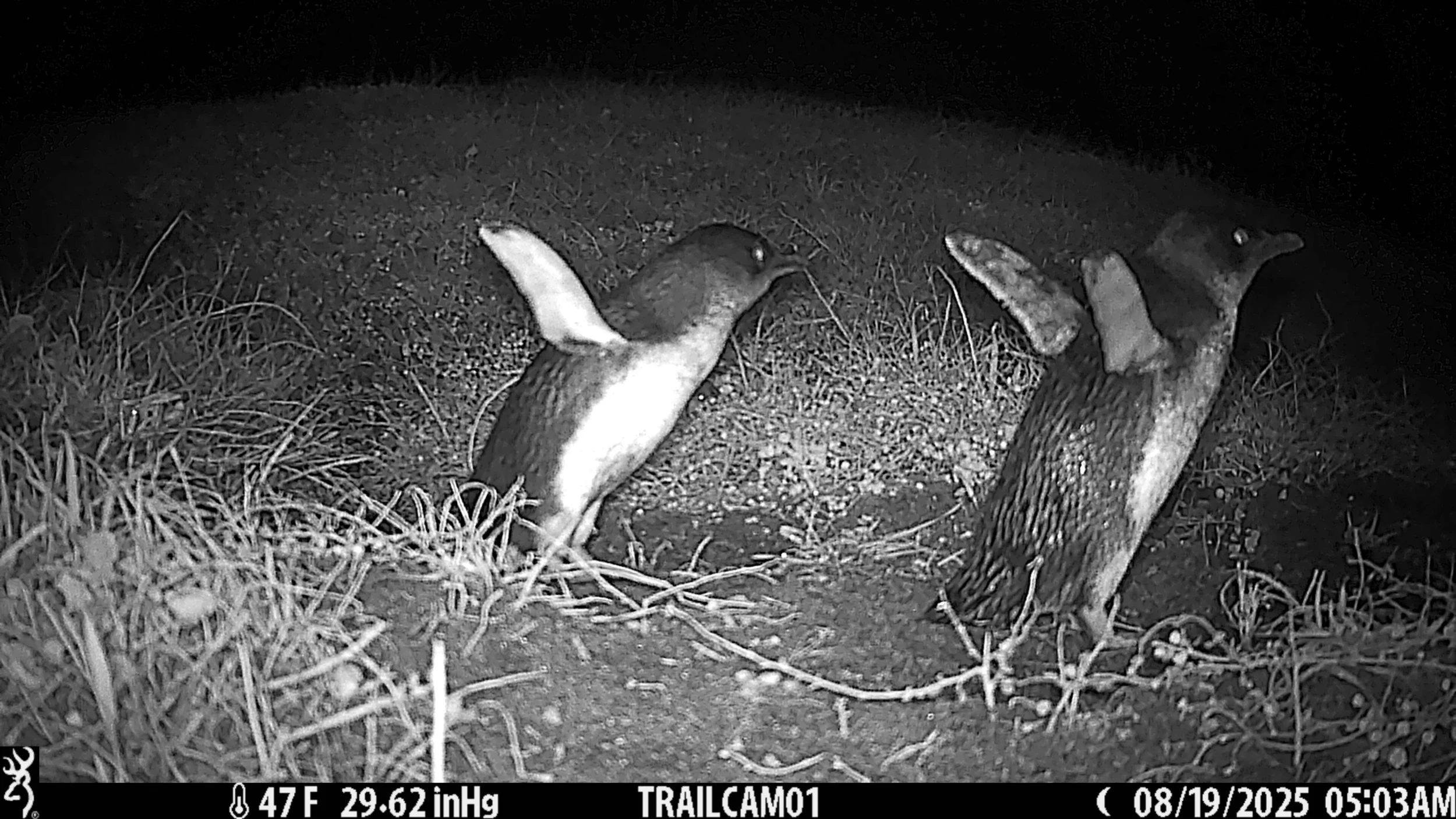
Kororā at Awana Bay (Credit: Barry Scott)
Across the rocky coastlines and hidden burrows of Aotea Great Barrier Island, one of our very special seabirds quietly returns home each night. Kororā, or little blue penguins, have long been part of the island’s coastal life, yet surprisingly little is known about the health and status of their population here on Aotea or the wider Hauraki gulf.
For many years, local residents and conservation groups have shared a growing desire to better understand and protect these remarkable birds. Questions are often asked: Where are the main colonies? Are numbers stable? Are chicks successfully fledging? What pressures are the birds facing both on land and at sea?
Until now, there have been very few opportunities to answer these questions in a coordinated way. That is beginning to change through the new community-based kororā monitoring project being coordinated by Ecology Vision in partnership with Auckland Council scientists, local community groups, and mana whenua. The project is part of a wider vision to strengthen seabird conservation knowledge across Aotea while building local capacity and stewardship within the community.
Building Knowledge Together
Aotea is home to many important seabird species, and kororā are one of the most visible and well-loved among them. In 2022, a detector dog survey funded by the Aotea Great Barrier Local Board helped identify a number of kororā burrows around the island. While this provided an important starting point, it also highlighted just how large the knowledge gap remains.
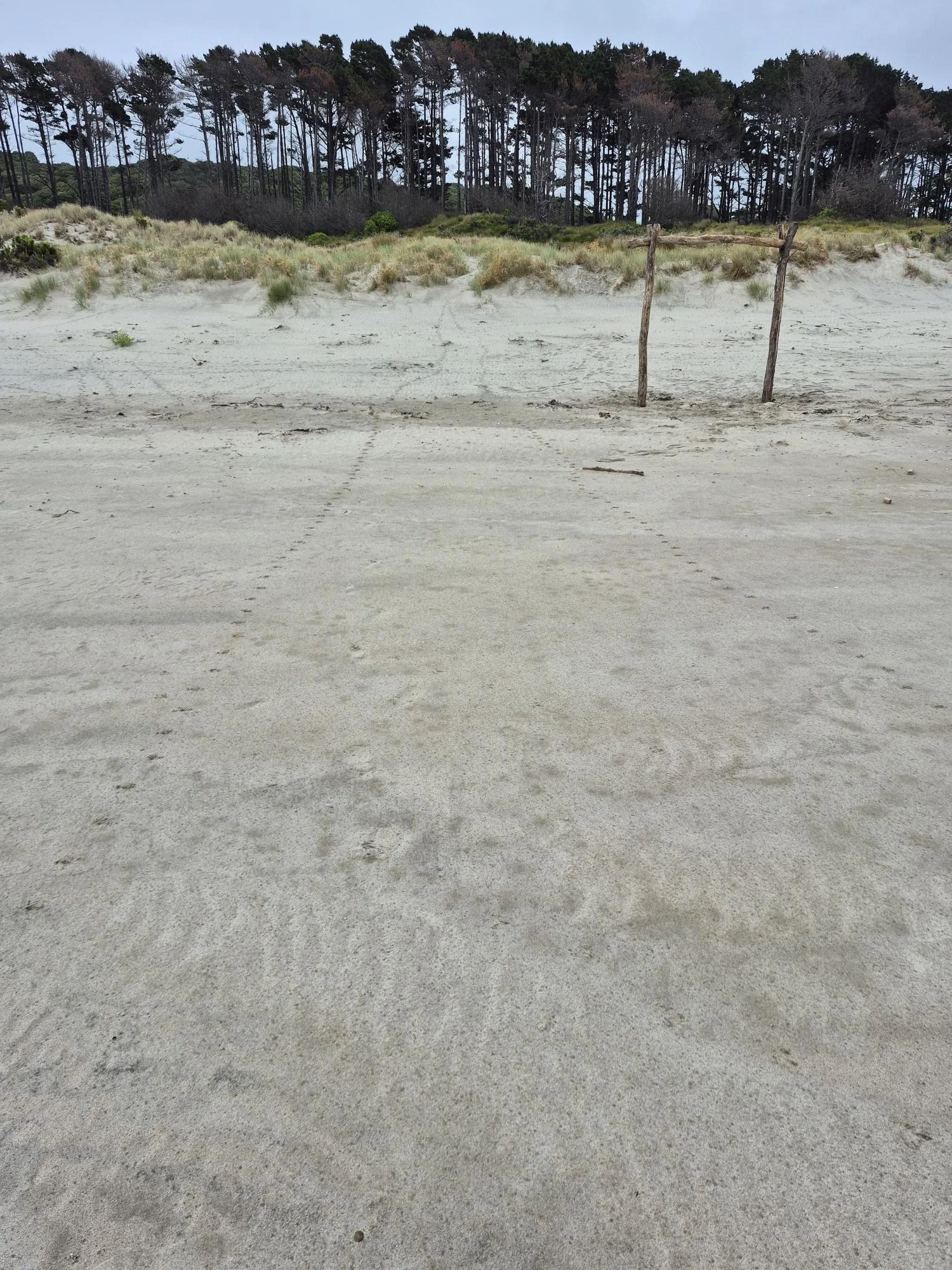
Tracks in the sand at Whangapoua (Credit: Thomas Daly)
The new monitoring programme aims to build a clearer picture over time by empowering local groups to take part in practical monitoring and data collection. Importantly, the project is designed so that monitoring can be adapted to the time and capacity of each participating group. Whether volunteers contribute several surveys a year or only occasional observations, every piece of information helps grow our understanding of kororā on Aotea.
Community groups already involved will have received training in the use of specialised equipment known as a burrowscope — a small camera attached to a flexible cable that can be carefully inserted into burrows to check for eggs, chicks, or adult birds. The monitoring process is designed to be low impact, and no birds are handled during routine surveys.
The information gathered will contribute not only to the Aotea kororā database, but also to the wider understanding of little penguins throughout the Hauraki Gulf and across Aotearoa, where significant gaps in knowledge still exist.
A Project Grounded in Community
One of the most exciting aspects of the programme is the strong community interest already emerging. Groups from across Aotea, including Glenfern Sanctuary, OME, Okupe trappers and others, have expressed enthusiasm about being involved. The project also creates opportunities for rangatahi and local residents to learn hands-on conservation skills and deepen their connection with the island’s marine environment.
The monitoring programme supports local kaitiakitanga and aligns closely with the broader Aotea Seabird Island vision supported by local kaumātua. Data gathered through the project will be jointly managed through partnerships between community groups, Auckland Council, and the New Zealand Penguin Initiative, ensuring local ownership and collaboration remain central to the work.
Beyond monitoring burrows, Auckland Council scientists will also carry out specialised research alongside community efforts. This includes health assessments, microchipping for individual identification, and diet studies using GPS tracking and scat analysis. These methods help researchers better understand where kororā are feeding, what they are eating, and how marine conditions may influence breeding success and survival.
While these scientific components are important, the real strength of the project lies in the collective effort behind it.
Looking Ahead
Seabirds are often considered indicators of ocean health, and kororā are no exception. Understanding how these birds are faring around Aotea can help inform future conservation and management decisions both on land and in surrounding marine environments.
Just as importantly, the project creates a pathway for community members to actively participate in caring for their local biodiversity. Conservation on islands like Aotea has always relied on strong community involvement, local knowledge, and people willing to contribute their time and energy toward something bigger than themselves.
This kororā project is another example of what can be achieved when communities, mana whenua, scientists, and local organisations work together toward a shared goal.
As monitoring begins and more information is gathered over the coming years, we hope the project will not only improve our understanding of kororā on Aotea but also inspire more people to connect with and care for the unique seabird life that makes this island so special.
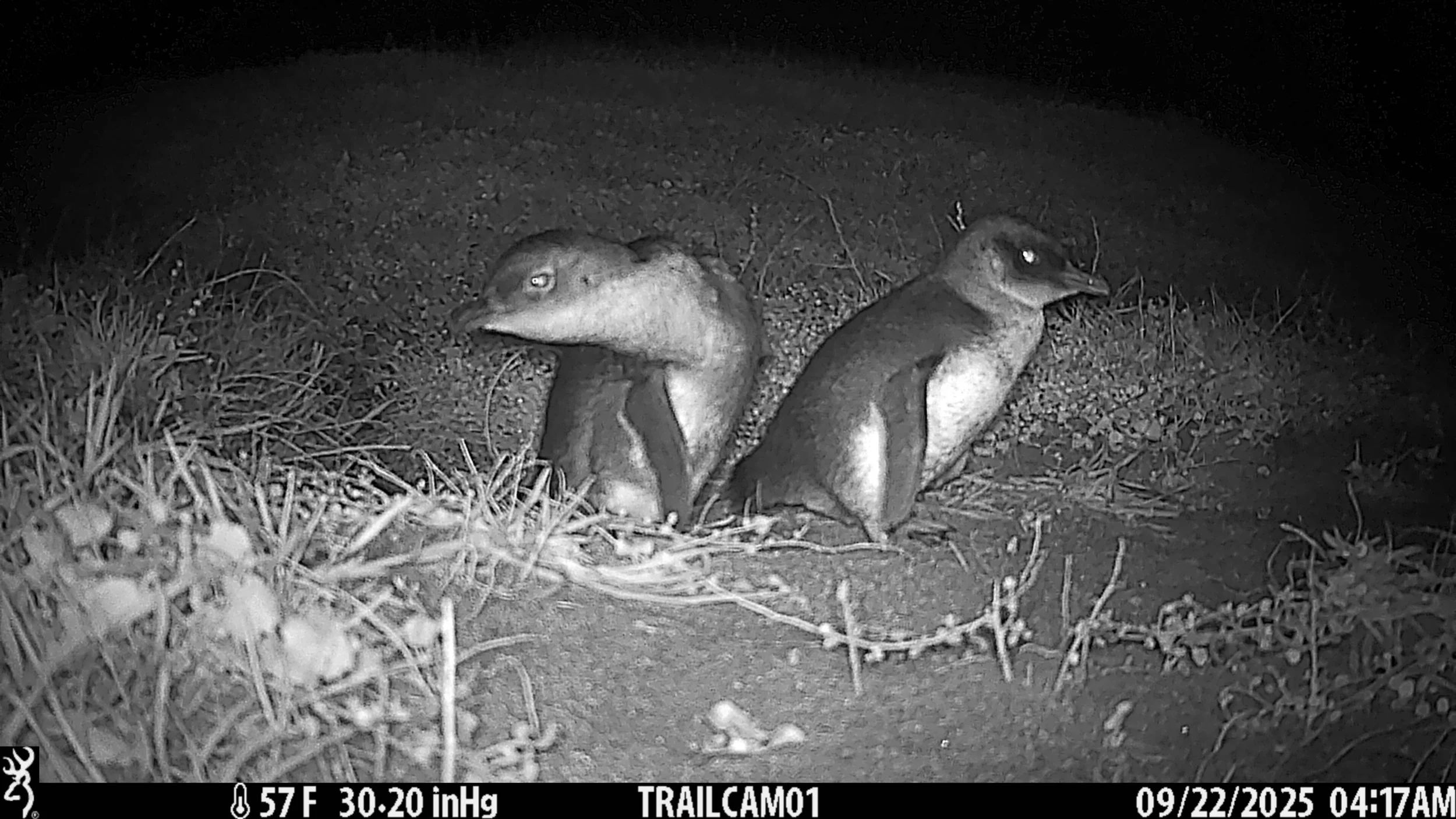
Kororā at Awana Bay (Credit: Barry Scott)